Day 2: Vector Stores

Module Overview

Session: Vector Stores

Session: Vector Stores

What You’ll Learn Today

By the end of this session, you will:

  • Understand vector search algorithms and trade-offs
  • Know how to choose and deploy vector databases
  • Build RAG applications with embeddings and vector stores

The Nearest Neighbor Problem

Finding similar vectors at scale

  • Exact search: Brute force, too slow for large datasets
  • Approximate search: Trade accuracy for speed
  • Scale: Billions of vectors, milliseconds response time

Important Vector Search Algorithms

Speed vs. accuracy trade-offs

  • LSH: Locality Sensitive Hashing
  • HNSW: Hierarchical Navigable Small Worlds
  • ScaNN: Google’s optimized ANN algorithm

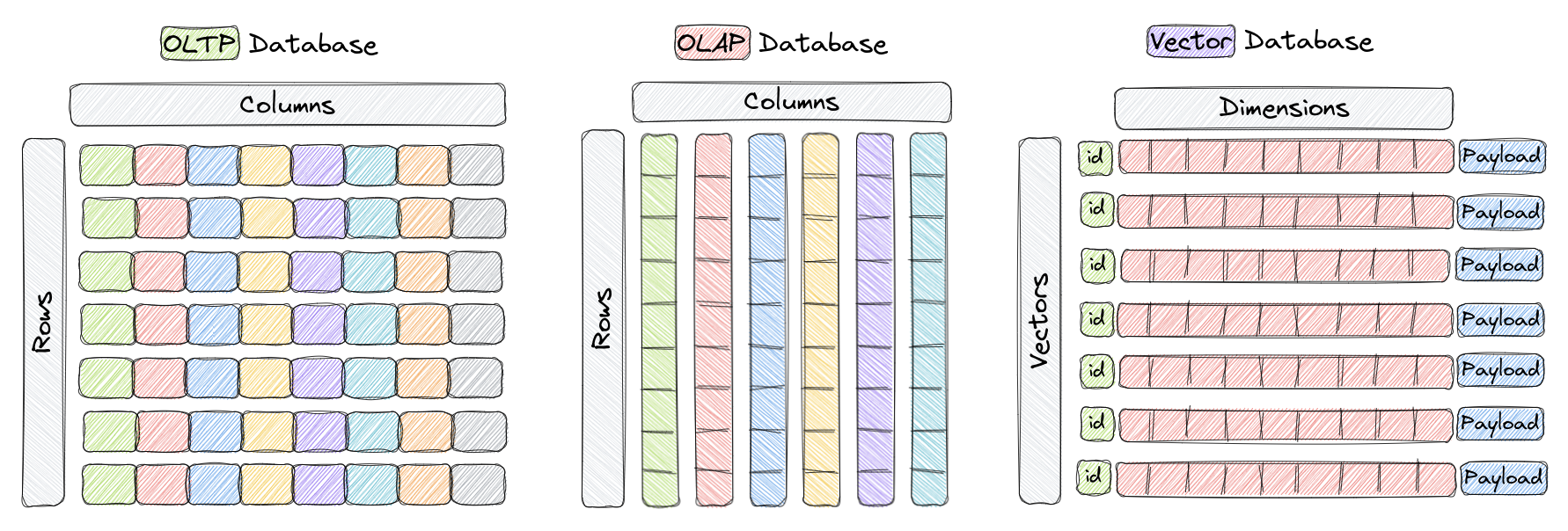
Vector Databases

Vector databases

Type Optimized For Storage Best Use Case
OLTP Writing & Single-Row Reads Row-store “User management, E-commerce orders”
OLAP Reading & Aggregation Column-store “Business Intelligence, Data Warehousing”
Vector Semantic Proximity Embeddings “AI Search, Recommendation Engines”

Operational Considerations

Production deployment factors

  • Scalability: Handle growing datasets
  • Latency: Response time requirements
  • Consistency: Update and synchronization
  • Cost: Storage and compute costs

Applications

Retrieval Augmented Generation (RAG)

Combining retrieval with generation

  • Problem: LLMs have limited, static knowledge
  • Solution: Retrieve relevant context, then generate
  • Result: Up-to-date, source-attributed responses

In Detail:

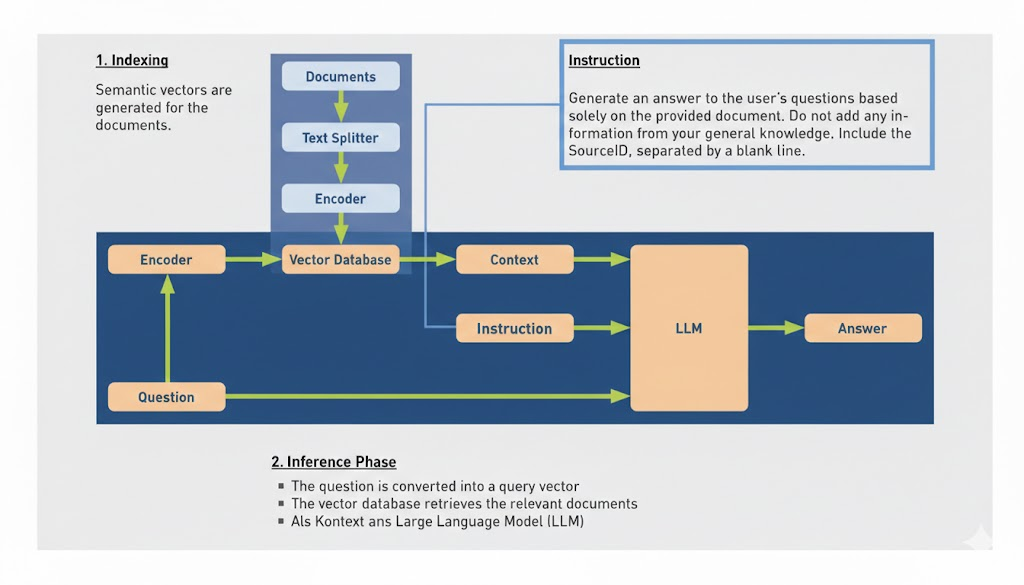
  1. Indexing: Embed documents, store in vector database
  2. Query: Embed user query
  3. Retrieval: Find similar documents
  4. Generation: LLM generates response from context

RAG Architecture

Detailed RAG architecture showing indexing, querying, retrieval, and generation steps

Other Applications
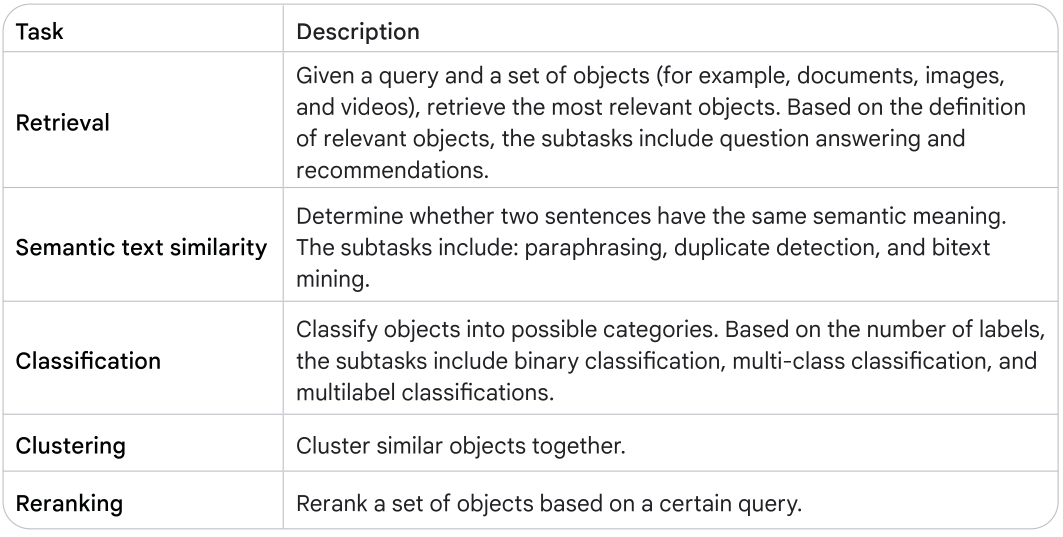
Beyond RAG: Retrieval, Semantic text similarity, Classification, Clustering, Reranking

Summary

Key Takeaways

  • Different types of embeddings for different data types
  • Evaluation is crucial for ensuring quality
  • Vector search algorithms trade accuracy for speed
  • Vector databases are essential for production systems
  • RAG combines retrieval with generation